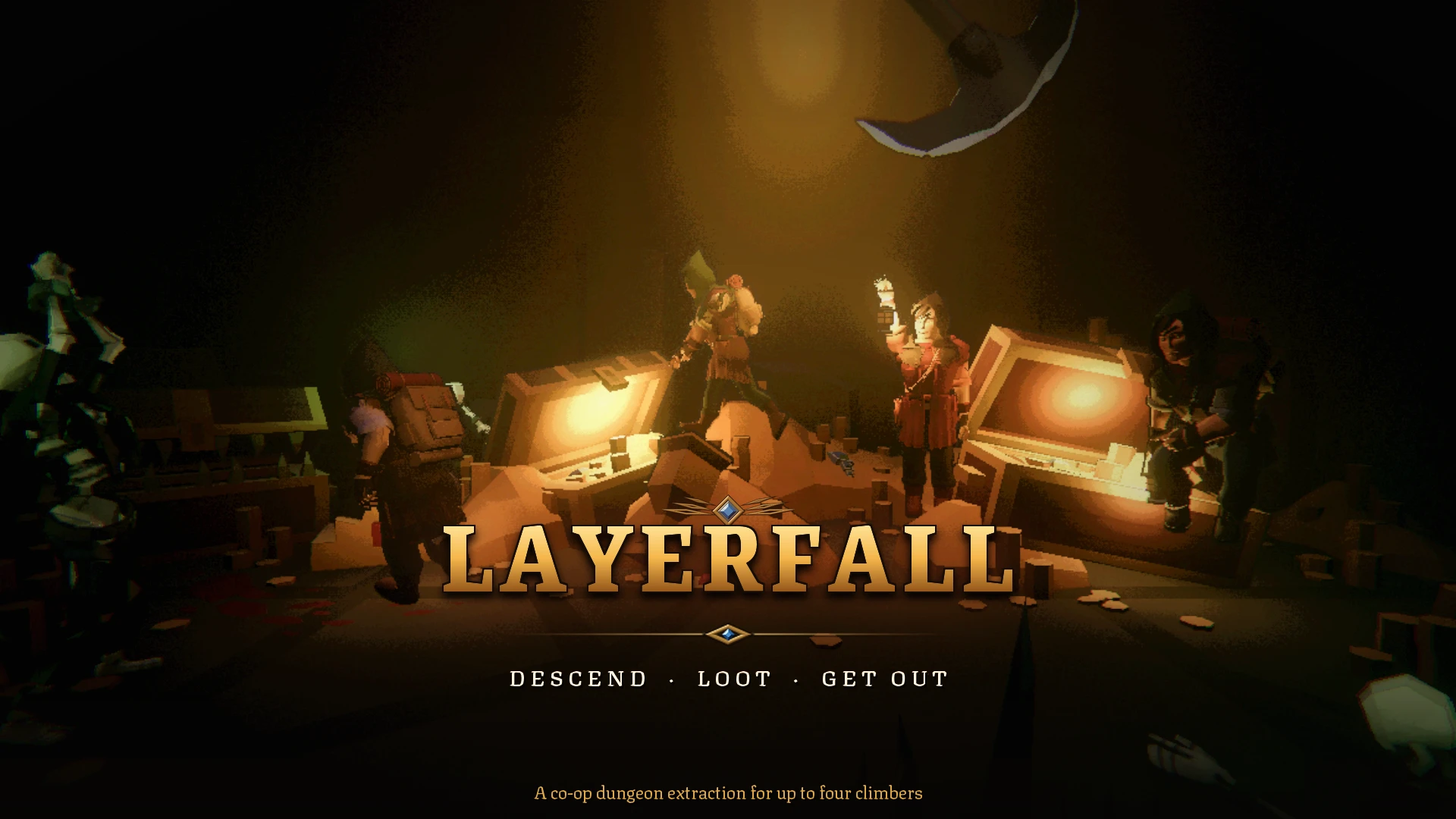
Layerfall started from a single sentence we kept coming back to in the studio: anything you carry out is yours; anything you drop down there stays down there. Everything else in the game is built to make that sentence hurt in the best way.
This devlog is about how that rule shapes the design — and why we think co-op makes an extraction game better, not just busier.
One rule, four climbers
Layerfall is a co-op dungeon extraction game for up to four players. You and your crew descend into a dungeon, grab what you can, and try to make it back up alive. Loot only counts once you are out. Die below and your haul stays in the dark.
We built it for co-op from the first prototype, not as a mode bolted on later. In an extraction game, the scariest moment is deciding whether to go on or go home — and that decision is far more interesting when four people have to agree on it. Someone always wants one more room. Someone is always carrying the best loot and the least health.
The best extraction moments aren’t fights. They’re four people standing at the exit, arguing about whether to go back down.
Layer by layer: the push-or-pull decision
The dungeon is built as stacked layers. Each one is deeper, darker and richer than the last. That gives every run a simple rhythm:
- Clear a layer and see what it paid.
- Look down. The next layer promises better treasure — and worse odds.
- Push or pull. Descend for the chest glowing in the dark, or turn back while you still can.
Because the reward and the risk both climb with depth, there is never a “correct” answer, only a decision the group has to own. That is the loop we are tuning around: not how hard the monsters hit, but how hard it is to walk away from the next layer.
You only see as far as your lantern
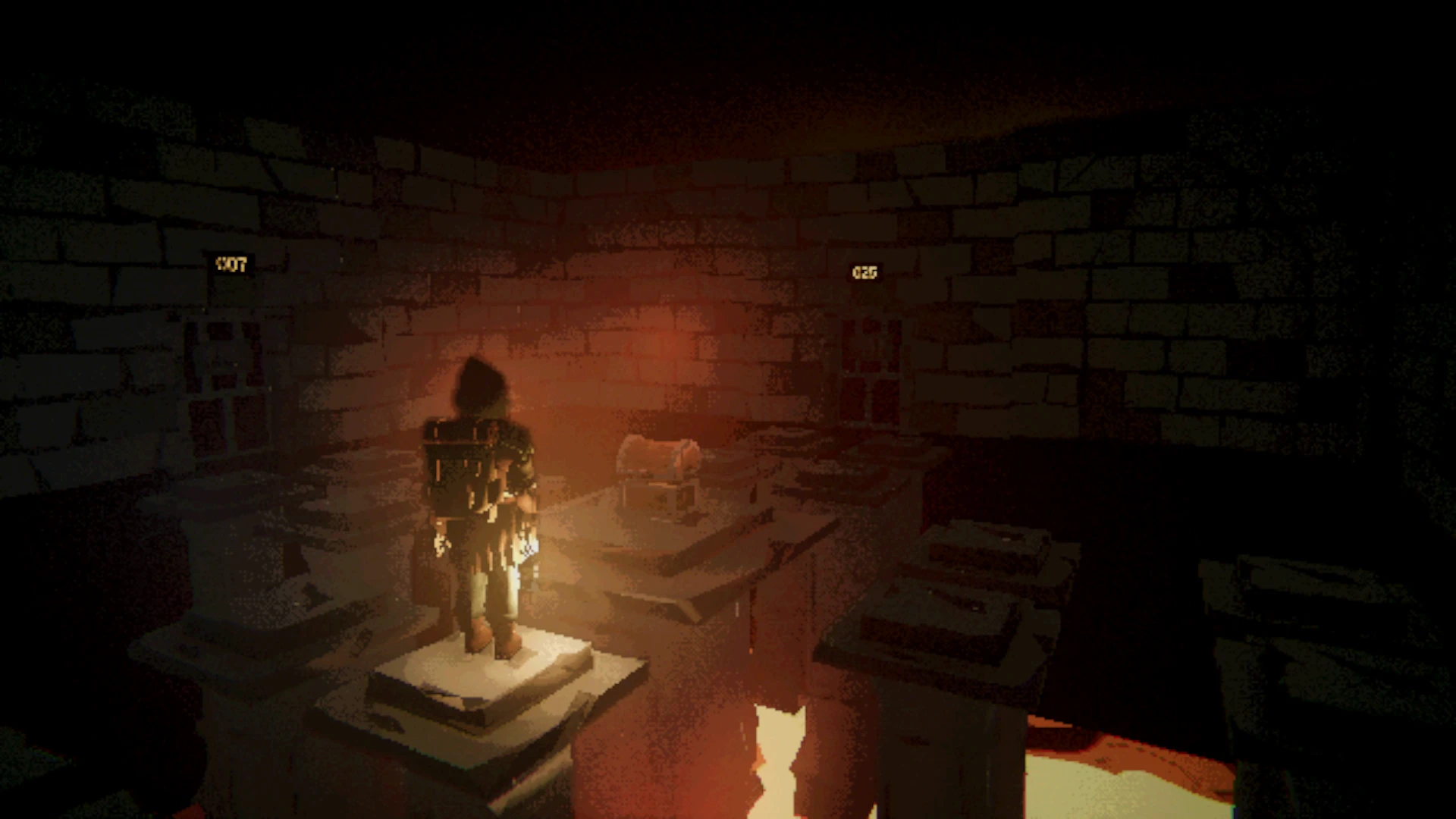
Layerfall uses a chunky low-poly look drenched in firelight and shadow. That style isn’t just mood — it is a mechanic. You only see as far as your lantern reaches, so light becomes information:
- A lit room feels safe, so you move faster and take more.
- A dark corridor makes you slow down, spread out, or send someone ahead.
- Splitting up covers more ground, but it also splits the torchlight.
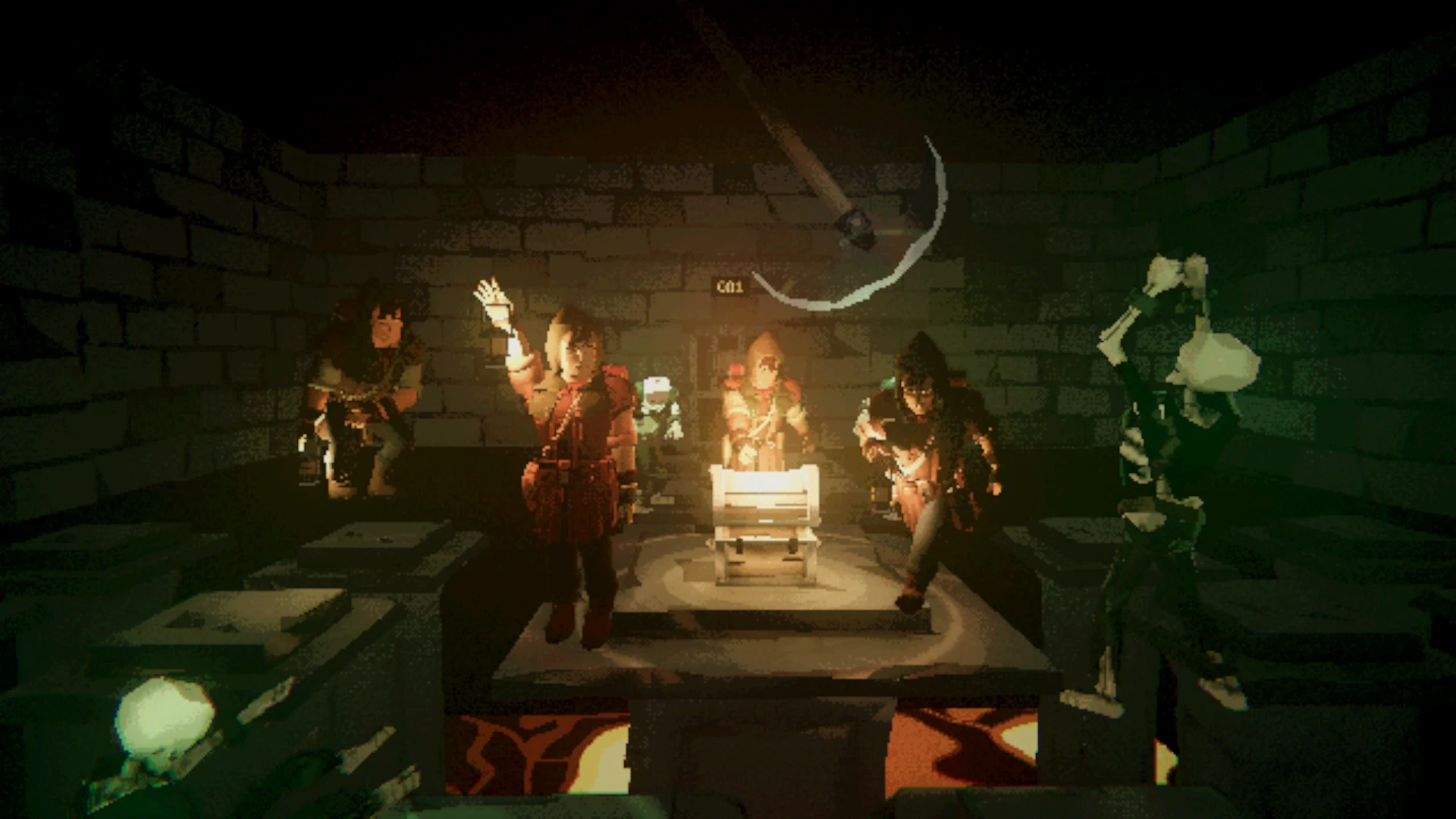
The low-poly style also keeps the game readable when four players, loot and enemies share a small, dark room — and it keeps performance steady, which matters in a co-op game where one struggling machine slows everyone down.
Loot that stays behind
When a run ends badly, the loot doesn’t vanish. It stays in the dark for the next crew to find. We love what this does to a failed run: it becomes a story (“we lost everything on layer four”) and a goal (“we’re going back for it”).
It also means a bad run never feels completely wasted. The dungeon remembers what you left, and the next descent starts with a reason to go deeper.
What we’re working on now
Layerfall is in development for PC. Right now our focus is the part everything else depends on: making the push-or-pull decision feel tense on every layer, and making co-op runs readable and fair when things go wrong. The same grey-box-first approach we describe in how we prototype is what got the core loop here.
If co-op extraction is your kind of game, the best way to follow along is the Layerfall page on itch.io — that’s where builds and updates land first. You can also see screenshots and the full feature list on the Layerfall game page.